Caribbean food began its journey into British life in the mid-20th century, closely tied to the arrival of the Windrush generation. From 1948 onwards, thousands of people from Jamaica, Trinidad, Barbados and beyond settled in the UK, bringing with them their food traditions, recipes and cooking techniques.
In the early years, authentic Caribbean ingredients were difficult to source. Home cooks adapted, substituted and shared what they could, keeping traditions alive in kitchens across London, Birmingham, Manchester and other growing communities. Over time, Caribbean cafés, bakeries and takeaway spots began to appear, introducing wider audiences to flavours that were vibrant and comforting.
By the 1970s and 80s, Caribbean food was no longer just for Caribbean households. It had become part of Britain’s evolving food culture especially in cities, where spice, slow cooking and communal eating were en vogue.
One reason Caribbean food is so loved in the UK is its balance. Bold seasoning meets fresh ingredients. Heat is matched with sweetness. Rich stews are paired with light sides. It’s food that feels generous, warming and satisfying perfect for the British climate and lifestyle.
There’s also a strong emotional connection. Caribbean cooking is rooted in family, shared meals and recipes passed down through generations. That sense of comfort and togetherness translates across cultures. For many people in the UK, Caribbean food represents celebration, community and joy whether at a family gathering, a street-food stall or a summer festival.
Caribbean cuisine’s rise in the UK has also been shaped by much-loved figures who brought island flavours into British homes through television, cookbooks and popular culture.
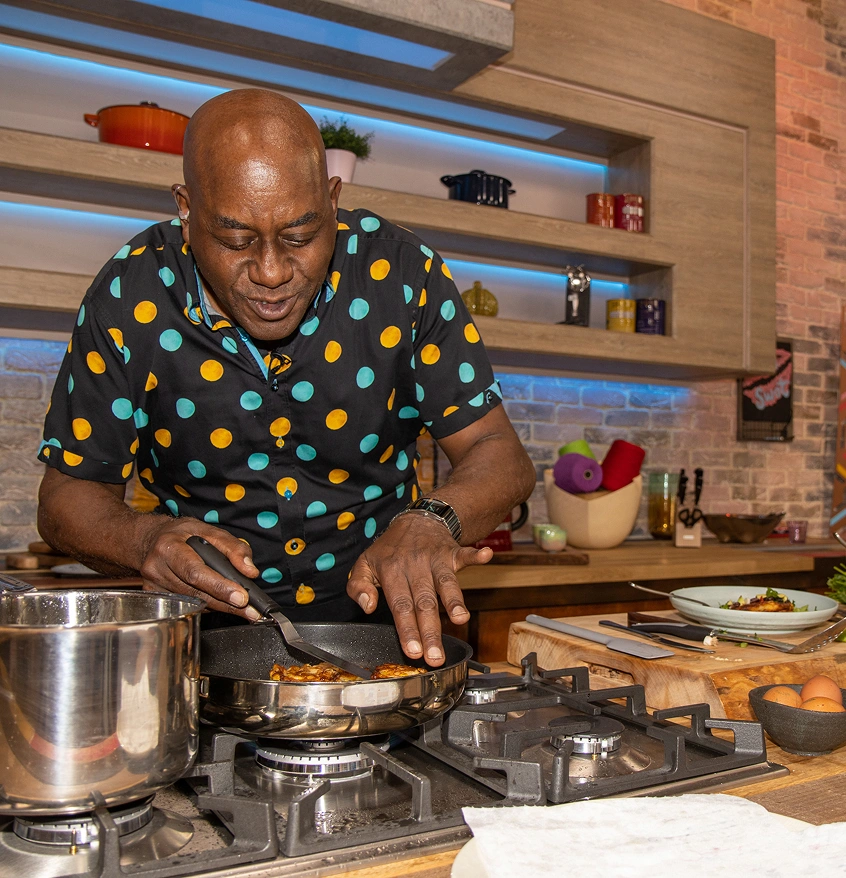
Few have had as lasting an impact as Ainsley Harriott. With his infectious energy, warmth and love of spice, Ainsley helped normalise bold Caribbean flavours on mainstream British TV from the 1990s onwards. His cooking celebrated confidence in seasoning, joy in food and the idea that flavour should never be held back. For many viewers, he was their first introduction to cooking with chilli, allspice, thyme and slow-cooked sauces.
Equally influential was Rustie Lee, a true pioneer who helped bring Caribbean home cooking into the public eye decades earlier. As one of the UK’s first Black female television chefs, Rustie championed Caribbean flavours with pride, authenticity and heart.
Together, they helped open doors, making Caribbean flavours familiar, approachable and loved by households across the UK. Their influence helped pave the way for the cuisine’s place in today’s food culture vibrant, respected and increasingly mainstream.
Music and sport have played their part too. Artists, athletes and public figures of Caribbean heritage have long spoken about the food they grew up with, helping popularise it. Events like Notting Hill Carnival, now one of the UK’s biggest cultural festivals, have also been instrumental, using food as a gateway to Caribbean culture for generations of Britons.
Today, Caribbean-inspired dishes feature everywhere from street-food markets to supermarket shelves, embraced by home cooks of all backgrounds.
Some dishes have become firm favourites in British homes including:
Jerk Chicken
Perhaps the most iconic Caribbean dish in the UK, jerk chicken is loved for its smoky heat and deep spice. Whether cooked on a barbecue or in the oven, it’s a go-to for flavour lovers.
Rice and Peas
A staple of Caribbean meals, this comforting combination of rice, coconut milk and kidney beans (or gungo peas) is a regular feature in UK kitchens and takeaways alike.
Curry Goat
Slow-cooked, rich and deeply spiced, curry goat has become one of the most beloved Caribbean dishes in the UK, often served at celebrations and Sunday dinners.
Fried Plantain
Sweet, golden and versatile, fried plantain can be enjoyed as a side, snack or main.
Patties
Flaky pastry filled with spiced meat or vegetables, Caribbean patties are a familiar sight in bakeries and supermarkets across the UK.
Today, Caribbean food in the UK is more popular than ever. It’s cooked at home, celebrated in restaurants, shared online and enjoyed across cultures. Its rise reflects not just a love of flavour, but a respect for the stories, traditions and people behind the food.
From grandmother’s kitchens to modern British homes, Caribbean cooking continues to connect generations — and for those unmistakable island flavours, it has to be Sea Isle.
For over 60 years, Sea Isle has played a key role in bringing Caribbean food into British kitchens. Established in the UK in 1965, at a time when authentic island ingredients were hard to find, we set out to place Caribbean store cupboard essentials within easy reach of UK kitchens — and we’re still doing it today. Trusted across generations, Sea Isle delivers the soulful taste of Caribbean food, with our wide range of easy to use staples…because great ingredients make Caribbean cooking a breeze.